
Medicine and Miracles
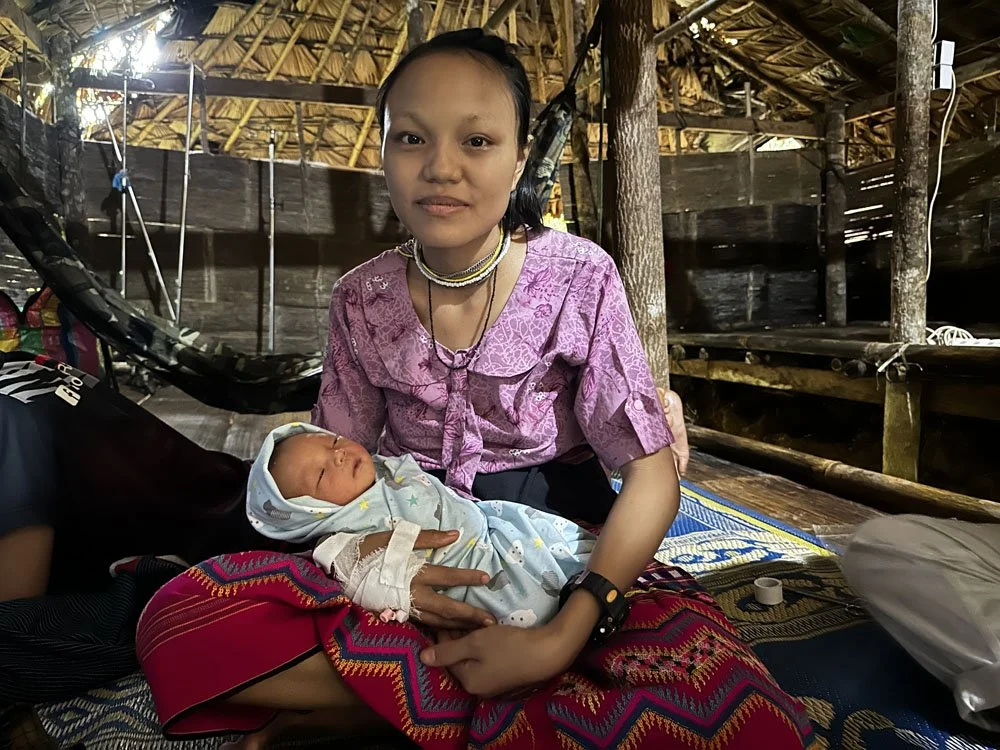
When a laboring mother couldn't make it to Rain Tree Clinic for delivery, our Physician Associate (PA) students helped keep her alive and safely delivered her baby along the way.
One day in mid-June, our duty team received a radio message: A pregnant woman from a village about five hours away on foot was in labor after her water had broken. Hours had passed, but the baby was still not coming.
This is a situation we see all too often in our area.
At first, her family and neighbors tried to help her deliver at home. After her water was broken, the village midwife tried to push her belly, hoping the baby would come. But as labor continued without progress, the midwife realized there was nothing more they could do.
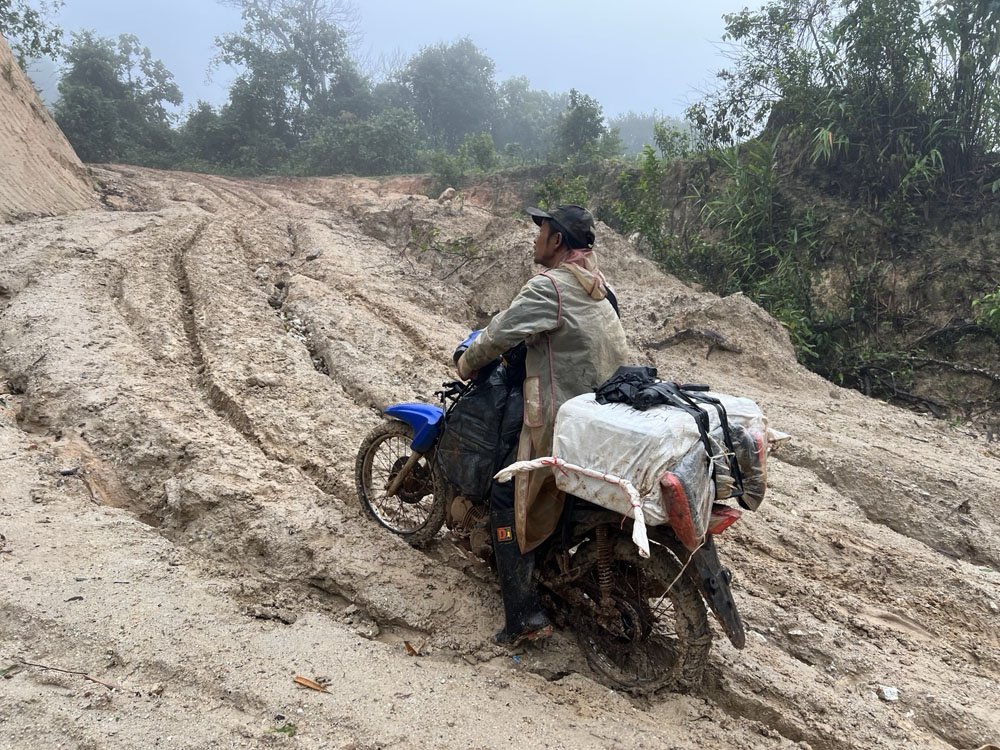
The terrain here is unforgiving, especially during rainy season. Sometimes, travel is almost impossible.
Despite her pain, the mother asked her family to take her to Rain Tree Clinic.
When asked why she wanted to come here, she explained that many people in her village had spoken about the clinic. They said Rain Tree Clinic could care for many illnesses and emergencies. She also knew that if she was unable to deliver normally, surgical care was available to help save both her life and her baby's.
Many women in the mountainous villages still choose to give birth at home. Some believe their ancestors will protect them better there. Others fear the long and exhausting journey to the clinic, especially during the rainy season, when rivers overflow and trails become nearly impossible to cross. Leaving home also means leaving behind livestock, young children, and daily responsibilities. As a result, many mothers remain at home until complications force them to seek medical care.
Whenever we receive word that a patient is being carried to the clinic, our PA students travel out to meet them as early as possible. Their goal is to assess the patient, begin emergency treatment, and reduce the risks caused by delayed medical care.
That day, Saw Say Wai Moo, a Year 5 PA student, and Saw Eh Doh Soe, a Year 4 PA student, quickly packed an emergency bag and set off on a motorcycle over rough mountain roads.
While they were still on the way, another radio message came through.
"The baby is about to be born."
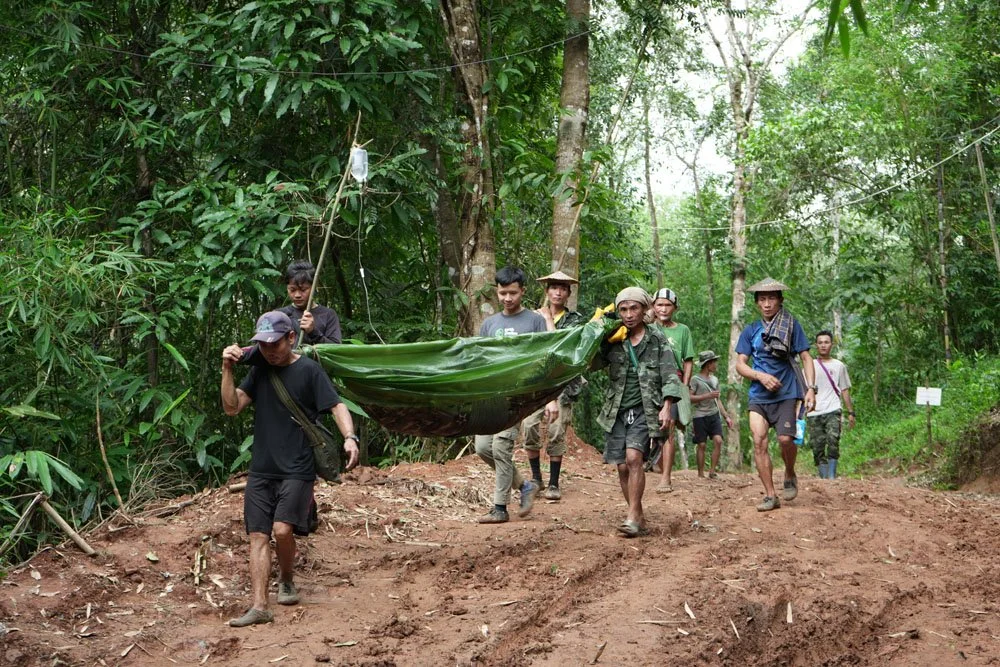
A "bambulance": a bamboo pole with a hammock slung beneath it, carried on the shoulders of two people.
They soon caught up with the bambulance (bamboo litter) team, who had stopped to rest at a house along the trail. After quickly assessing the mother, they saw that the baby's head was already visible.
"You deliver the baby," Say Wai Moo told his junior. "I'll take care of the mother."
Eh Doh Soe immediately put on gloves and began assisting the delivery. For several tense minutes, however, the baby's head remained stuck. The two students briefly discussed whether an episiotomy — a small surgical incision to enlarge the vaginal opening — might be necessary. Just as they were preparing for the procedure, the baby's head began descending again.
Eh Doh Soe encouraged the mother to push once more.
After two or three more strong pushes, the baby's head emerged, and he carefully delivered the rest of the baby.
Say Wai Moo cared for the mother and delivered the placenta. Eh Doh Soe quickly dried the newborn, assessed her condition, and waited.
Then, after several anxious moments, the baby let out her first cry.
It was the sound everyone had been hoping to hear.
Both students breathed a quiet sigh of relief before continuing to care for the mother and newborn. The baby girl was breathing well.
But the danger was far from over.
Shortly after the delivery, the mother began bleeding heavily. Blood soaked through the floor of the house, and large clots formed around her. She was experiencing a severe postpartum hemorrhage.
Say Wai Moo immediately recognized the danger. Because the mother had endured a prolonged labor and her belly had been pushed so extensively while she was at home, he knew this complication was possible from what he had learned during his training. Although he felt nervous, there was no time to hesitate.
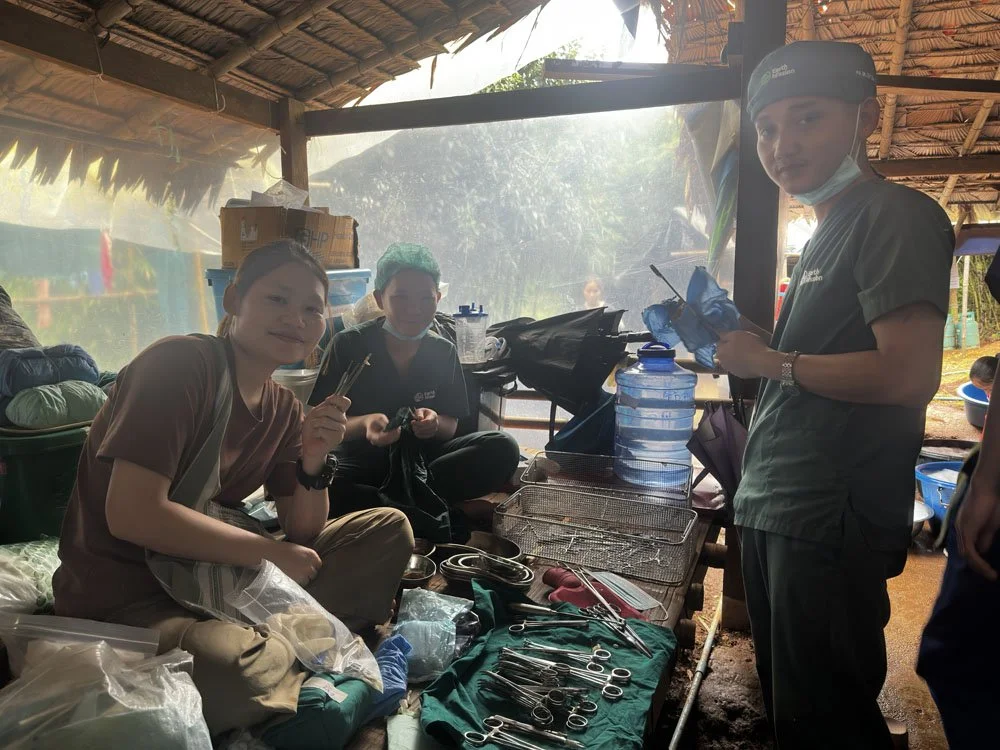
Several of the Earth Mission crew at RTC.
He quickly administered oxytocin and misoprostol to help the uterus contract and stop bleeding, and he started intravenous Ringer's solution on the other hand to replace the mother's lost fluids. Gradually, the bleeding slowed and finally came under control.
Only after both mother and baby were stable could the journey continue.
The bambulance team lifted mother and baby once again and resumed the long walk toward Rain Tree Clinic. Along the way, the PA students closely monitored both patients.
When they finally arrived at the clinic, the mother underwent a thorough examination. Her hemoglobin level had fallen to just 6 g/dL, confirming severe blood loss. She received a blood transfusion, and our medical team repaired a tear in her cervix with sutures. She was also treated with antibiotics, pain medication, and supportive care.
When they finally arrived at the clinic, the mother underwent a thorough examination. Her hemoglobin level had fallen to just 6 g/dL, confirming severe blood loss. She received a blood transfusion, and our medical team repaired a tear in her cervix with sutures. She was also treated with antibiotics, pain medication, and supportive care.
The baby girl also needed urgent medical attention. Shortly after birth, she developed a fever, rapid breathing, and a fast heart rate. Blood tests confirmed a neonatal infection, likely related to the prolonged rupture of membranes and prolonged labor. She was immediately started on intravenous antibiotics. Because of her breathing difficulties, breastfeeding was temporarily delayed to reduce the risk of aspiration, and she received intravenous fluids to maintain hydration.
Over the following days, both mother and baby steadily recovered. The mother's appetite returned, the color came back to her face, her vital signs stabilized, and she was able to smile again. After completing a full seven-day course of antibiotics, the baby recovered well and began feeding normally.
Both mother and daughter have been discharged home.
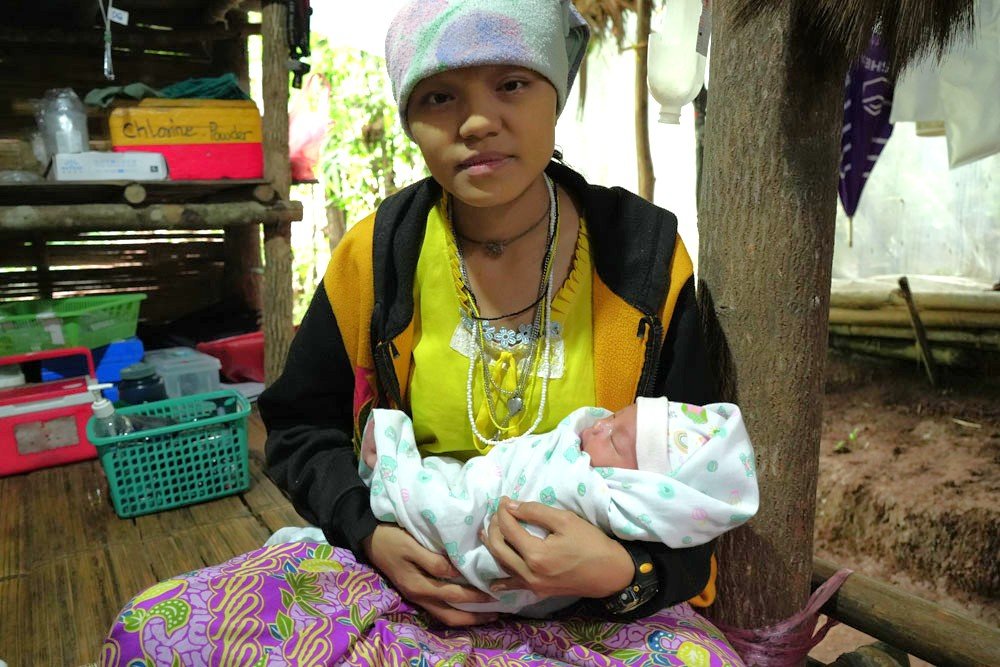
It was a long and dangerous road to safety.
This birth did not take place in a hospital delivery room surrounded by monitors and emergency equipment. It happened on the floor of a village house, in the middle of a difficult journey through the hills, with two PA students carrying little more than an emergency bag, their training, and their determination to save two lives.
By God's grace, both mother and baby survived.
Stories like this remind us that childbirth can still be life-threatening in the remote communities we serve. They also remind us of the courage of mothers, the dedication of our PA students and medical team, and the determination of families who will carry their loved ones for hours in search of help.
Just days ago, this mother and her baby were fighting for their lives.
Now, they have returned home together.