
Bombs and Barbecue
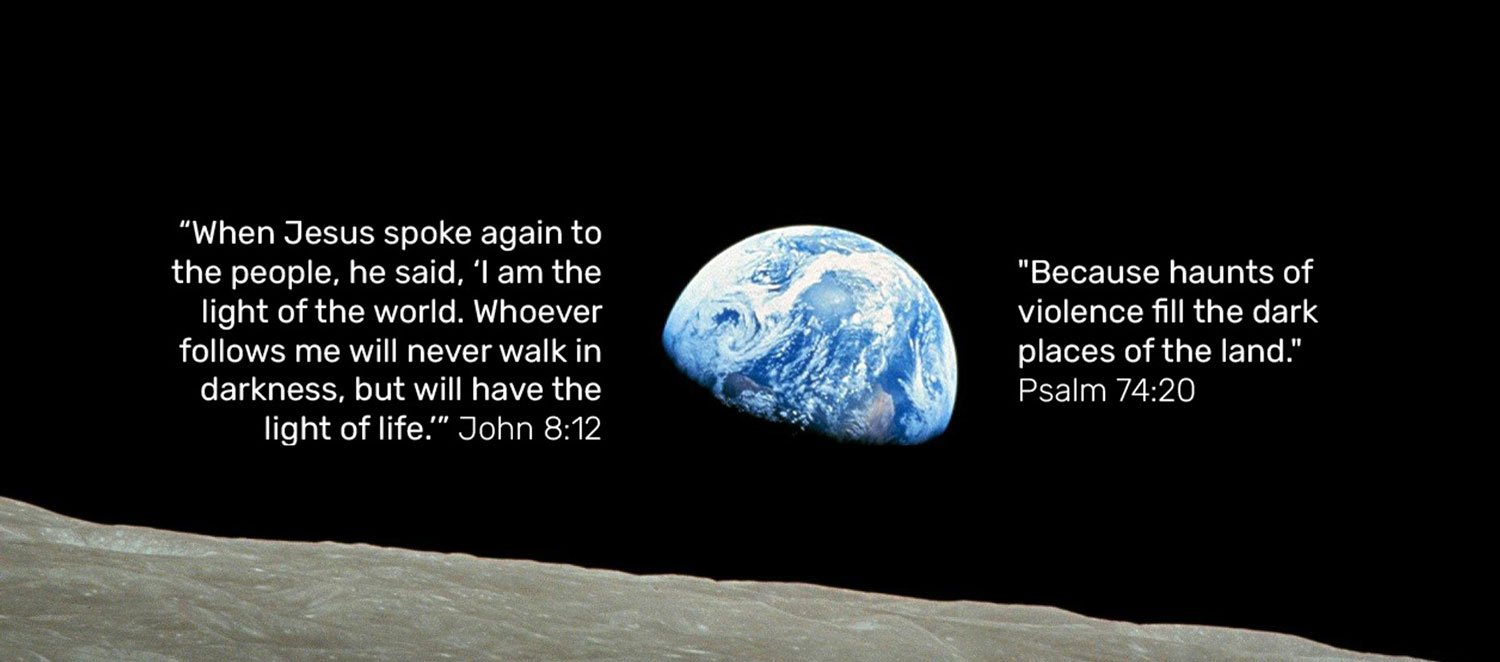
On December 21st, 1968, three men began a journey that would take them farther than any human had ever travelled. The astronauts of Apollo 8 would be the first humans to escape earth’s orbit and disappear around the far side of the moon. For 20 minutes, they were alone and out of contact with everyone on Earth as they traversed the dark and cold (-2080 F) side of the moon. Celebration rang out as these three men reconnected with the host of supporters holding their breath as they waited for them to appear from the other side of the moon. On Christmas Eve, as the three men rounded the dark side of the moon for the ninth time and experienced the “Earth Rise,” they broadcast a message to more than a billion viewers and listeners, the most widely watched broadcast at that time. Here is some of that transcript:
“We are now approaching lunar sunrise, and for all the people back on Earth, the crew of Apollo 8 has a message we would like to send to you.
“In the beginning, God created the heaven and the earth.
“And the earth was without form, and void; and darkness was upon the face of the deep. And the Spirit of God moved upon the face of the waters.
“And God said, let there be light: and there was light.
“And God saw the light, that it was good: and God divided the light from the darkness.
“And God called the light Day, and the darkness he called Night. And the evening and the morning were the first day.
“And God said, let there be a firmament in the midst of the waters, and let it divide the waters from the waters.
“And God made the firmament and divided the waters which were under the firmament from the waters which were above the firmament: and it was so.
“And God called the firmament Heaven. And the evening and the morning were the second day.
“And God said, Let the waters under the heaven be gathered together unto one place, and let the dry land appear: and it was so.
“And God called the dry land Earth; and the gathering together of the waters called the Seas: and God saw that it was good.
“And from the crew of Apollo 8, we close with good night, good luck, a merry Christmas, and God bless all of you.”
I grew up during the time when these men were travelling to the moon. As a starry-eyed young man, I dreamed of becoming an astronaut, but my bubble was burst when I found out that you can’t wear glasses. Those men and women who are on the front lines are extraordinary people. They have special talents and are willing to take some pretty significant risks. Frank Borman, James Lovell, and William Anders anticipated that they had a 50/50 chance of making it back to Earth. But they knew that they were not alone, with a virtual army of supporters working in the background to make sure that their mission would be a success.
Like the Apollo program, Earth Mission has those extraordinary people who travel to the far side of the world. They put their lives on the line, but unlike the astronauts, they bring light to those dark places. Psalm 74: 20 notes, “For the dark places of the world are the haunts of violence.”
In the midst of the darkness of bombs and conflict, Earth Mission is bringing the healing Light of Jesus to a dark place of the world. These are the hands of Jesus in motion.
There is also an army of people supporting those efforts. For the past three years, I have had the opportunity to travel to the other side of the world and be a small part of those support efforts. Let me give you a glimpse of some of those efforts and tell you a bit of my story from this year’s trip.
As I leave my house, my grandson puts his hand on my shoulder. It is a touch that seems to freeze in time and in my mind. He loves me, I love him, and he knows that the place that I go to has some risks. Leaving family to go to an active war zone makes you think about what is really important, but there is no better place to be than following Jesus. For those who have travelled internationally, you know the sensations of long flights and sleepless nights, jet lag and changes in climate and culture. I landed in Chiang Mai, and my good friend Dan Ryan picked me up and brought me to his house. However, my luggage was still in Seoul, Korea, and now our timing for heading out would need to be changed. Dan lent me some shorts and a shirt, and we used this time to think through the project together. Our timing and God’s timing don’t always match up. But His is perfect.
For the past several years, there have been conversations about installing a hydroelectric system to supplement the electric grid. With some grant money, this was the year to work through the design, order the equipment and parts, ship them, get them on site, and install the system.
The benefit of a hydroelectric system is that it would provide electricity 24/7, with no additional cost after the installation. During the rainy season, solar panels don’t produce as much electricity (and don’t ever produce at night). Generators require diesel, which is expensive and hard to transport to this location. In addition, generators produce a heat signature that can be picked up by drones with infrared capabilities, and solar panels are easy to see from the air as well, making them both potential targets for bombing. A small hydroelectric system does not have a heat signature and is easily concealed.
The design of this project started months before my trip as we looked for hydroelectric companies and determined the necessary design parameters: Head and pressure, pipe length and friction, voltage, electrical connections to batteries, fittings, water source and available volume, etc. Once we determined the equipment needed for this application, shipping became a challenge. The equipment is manufactured in New Zealand, but from past experience, we were hesitant to ship directly as custom costs sometimes run 100%-200% of the cost of the products being shipped. The equipment was shipped to AR, then transported several more stops along the way until it finally made its way over some unforgiving terrain all the way into the jungle to Rain Tree Clinic. All that transportation was a logistical challenge, with multinational groups and in varying time zones. It arrived at precisely the time we needed it to arrive. We weren’t ready the day before, and if it hadn’t arrived at that time, we would have had to wait until it arrived to proceed any further. God’s perfect timing.
My clothes arrived, and we began our trip to RTC. The trip takes early mornings and long bumpy rides along jungle roads, over rivers via questionable methods, and stretches on foot. For example, the last leg of the trip is a bobble-head ride in a Toyota Hilux for approximately 50 miles; it takes six hours over rough, four-wheel-drive dirt road. Just a couple of kilometers from RTC, we took a short detour to look at the damage done to a nearby village where two bombs had been dropped the week before. Fortunately, the bombs missed any structures, and no one was hurt. We arrive at RTC at dusk and get settled into our five-star living quarters, complete with two tents on a bamboo platform with a tarp roof.
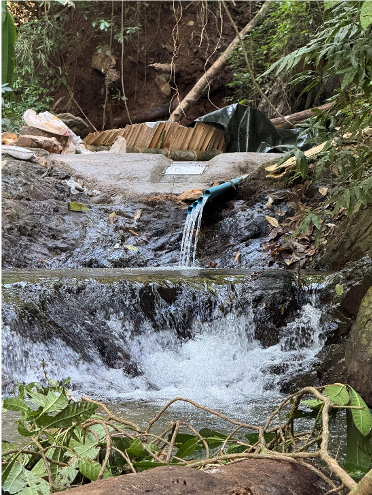
For the next two weeks, we worked on installing hydroelectric equipment and piping. The inlet was in a very remote and hilly area in a sharp “V” shaped ravine. Part of the design challenge was to install the inlet in a way that would be stable during the rainy season, when the stream would become flooded.
The engineering students were amazing and hardworking. Everything had to be carried up steep, slippery terrain. The inlet was approximately 1,500 feet from the turbine. To connect the inlet to the turbine, we used 3-inch coiled pipe. Each section of pipe was 50 meters long (162 feet) and had to be pulled through very dense jungle.
The water in the stream had to be temporarily diverted and a new concrete dam and weir installed to collect water through the hydroelectric filter box. Concrete was mixed on site with sand and gravel from the stream. All those tasks required high-energy manual labor.
I can’t say enough about how those students performed those tasks. They are my heroes. On the final day of work, we connected the final section of pipes to the turbine and began producing electricity.
As I look back at this one project as part of the larger efforts at RTC, I am amazed at all the people who work behind the scenes. When I think of Jesus, I know that He came to heal people. In this remote area in a dark place of the world (a country in conflict), people are being healed.
Jesus taught people. Students leave their communities to come to RTC to learn how to help others and then go back to serve in their communities. There are teachers at RTC.
Jesus was a builder. Students and other folks give of their time and talent to help build the infrastructure necessary to carry out this work. There are engineers and builders at RTC.
Jesus was interested in the details. He is preparing a place for us. There are people working at RTC who you may never hear about who work on logistics, transportation, finances, housing, food. There are people who care and prepare for the needs of others at RTC.
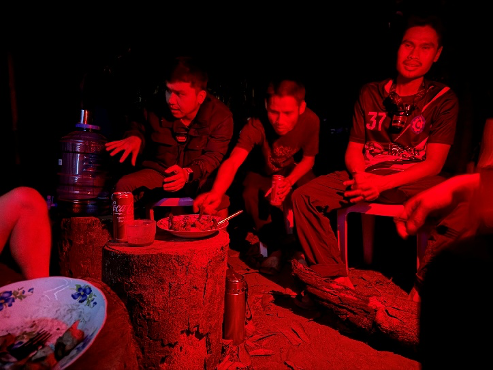
The last night I was there, the engineering staff members bought some beef and pork. Normally, I am not always sure what we are eating (rice and something dead?). However, this was really well marinated and cooked over an open fire – delicious! I had brought some Wright’s barbeque sauce with me, and we had a great barbeque meal (Maybe better than Wright’s 😊). At that same time, there was a major battle going on not too far away, and planes were flying over our location. We were using our red-filtered flashlights to minimize any potential visibility. We would hear a plane approaching and jump into a trench. Then, after it was clear, we would come back out and eat some more barbecue. What a life, “bombs and barbeque.” They dwell in this tension but don’t allow it to stop them from living. If anything, it makes them live more deeply.
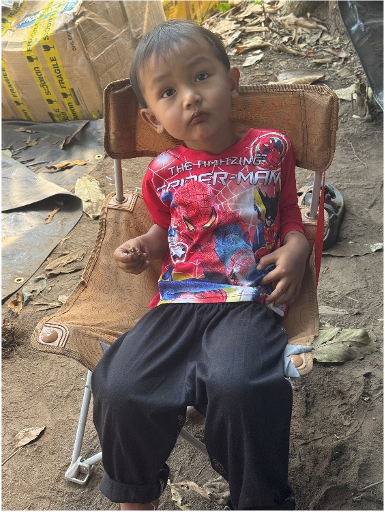
As I think about this trip and all the people who invest in this adventure, I think of a little boy who would come to our camp site. He was probably around 5 years old, and once I gave him some chocolate, we became good friends. I would put some strawberry jam on a cracker, and he would lick the strawberry off and ask for more. So cute. His name was “Shining Hope.” His parents probably had him when the conflict in their country was ramping up again.
In the midst of darkness on the other side of the world, this community is an oasis of Shining Hope. The hands and heart of Jesus. I am always humbled when meeting and spending some time with these extraordinary people. Light in the darkness! You may never go to the other side of the world, but you can share your talents and gifts to bring some shining hope to those around you.
I read a simple line in a book that has challenged me: “Live now for what really matters.” Follow Jesus and share His love!